
For Education
Supporting the Outcomes Education Providers Are Working Hard to Achieve
One Digital Licence. From age 14 through to retirement.
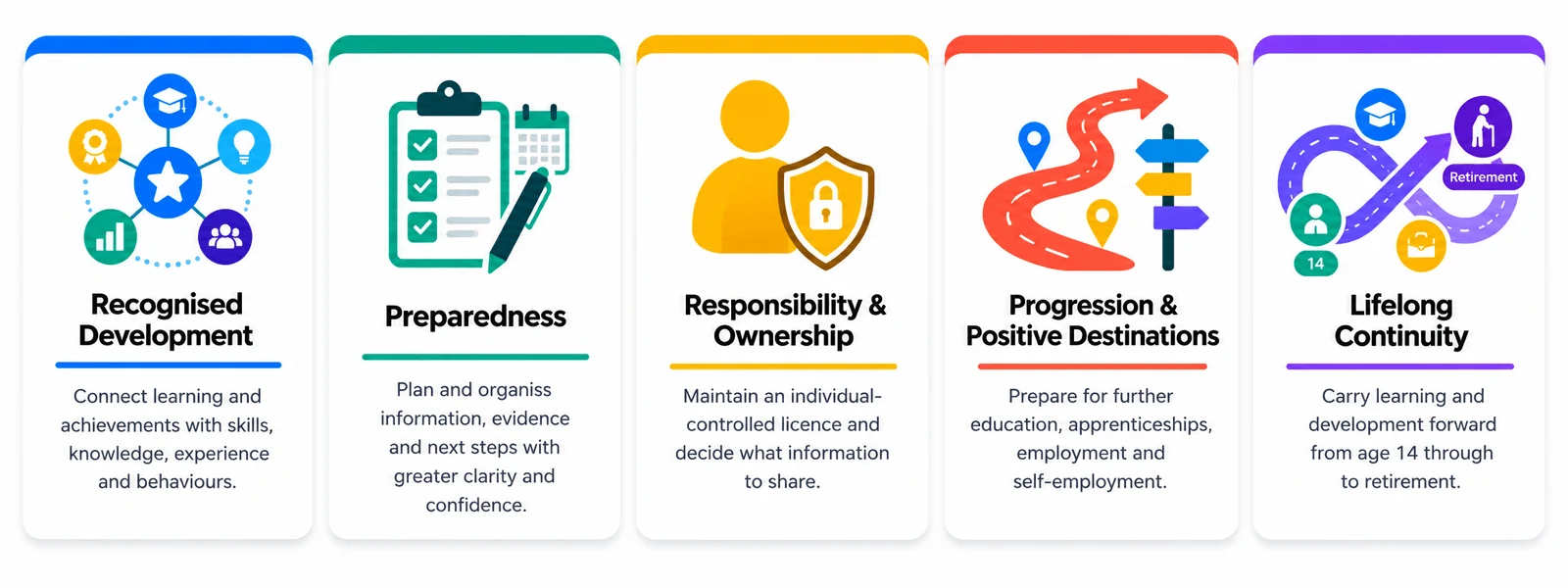
Schools, colleges and training providers help learners develop the skills, knowledge, experience, behaviours and confidence needed for what comes next.
CVGO Digital works alongside this support, giving each learner an individual-controlled digital licence that begins from age 14 and continues through education, apprenticeships, employment, self-employment, career changes and retirement.
Education provides the starting point. The learner carries it forward.
Education Builds The Foundation
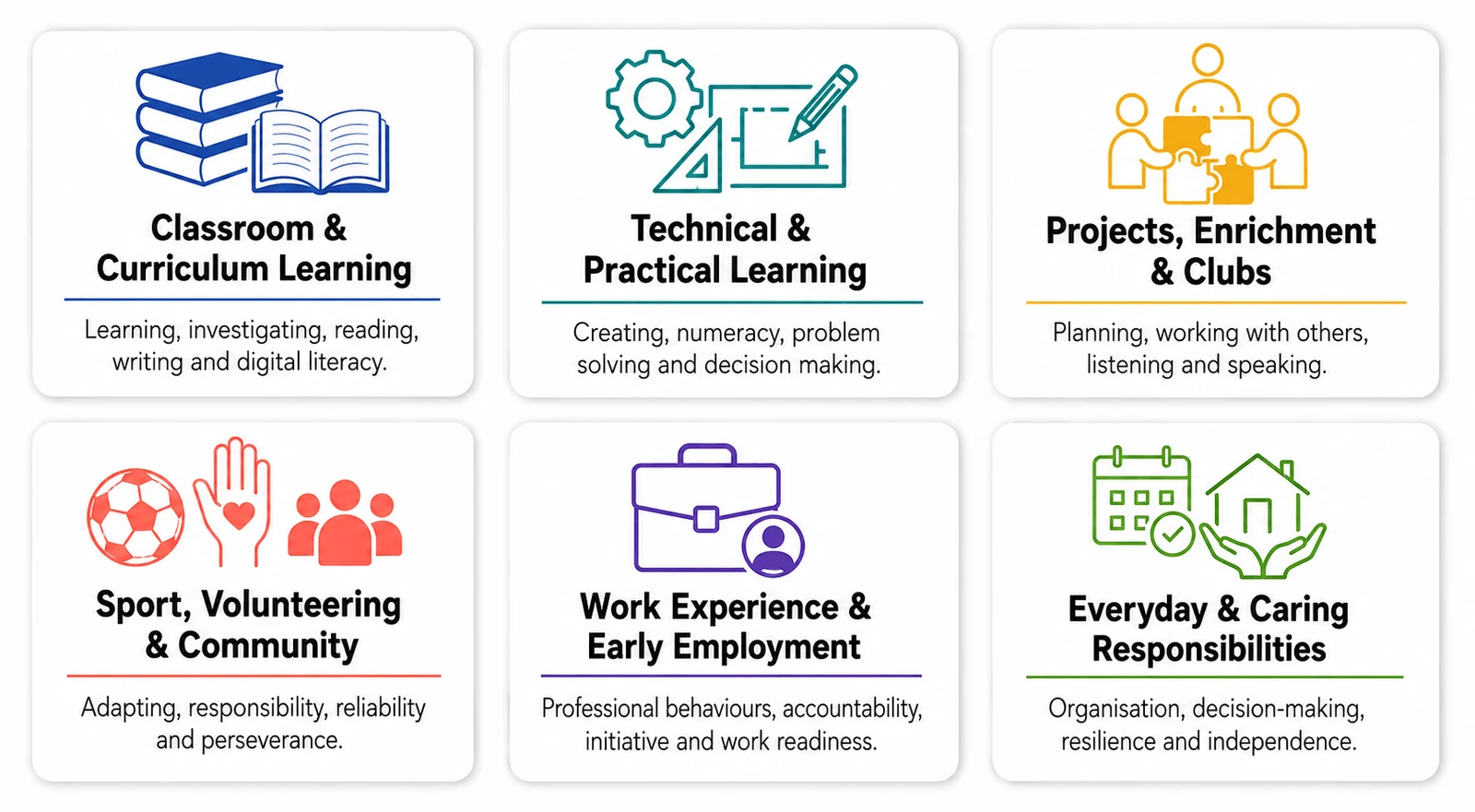
Development Extends Beyond Qualifications
Schools, colleges and training providers help learners develop through academic, technical and vocational learning, practical projects, enrichment, work experience and wider participation.
These experiences can build transferable skills, professional behaviours, responsibility and work readiness. However, learners do not always recognise what they have developed, understand its value or know how to communicate it when an opportunity arises.
Development should be recognised, recorded and carried forward.
Working Alongside Existing Provision
Designed to Complement, Not Duplicate
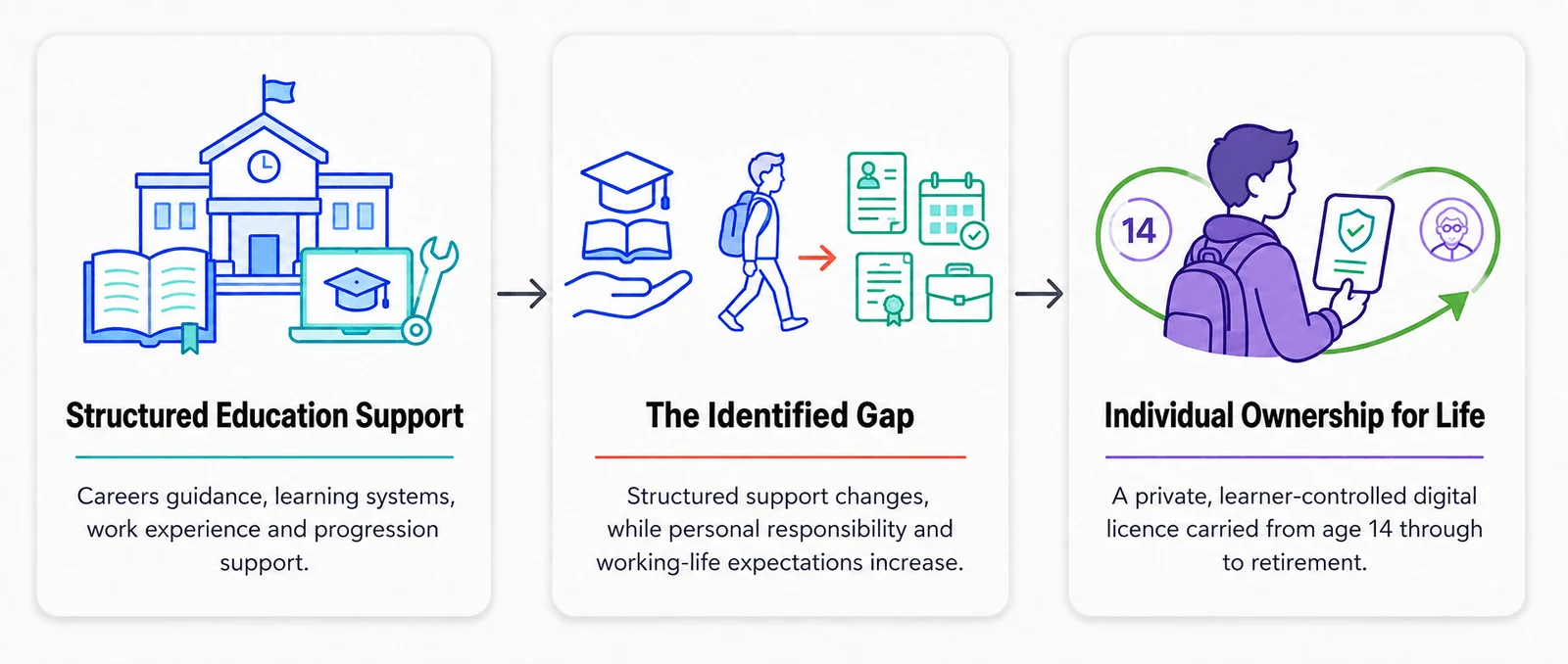
Schools, colleges and training providers already use valuable careers, learning, work-experience and progression systems to help learners explore pathways, record activities, prepare for their next destination and access appropriate support.
CVGO Digital works alongside and complements these systems and the work of careers teams, tutors and support staff. It meets a different need by giving the learner a private, individual-controlled digital licence designed to continue beyond structured education and training.
The education provider pays for and allocates the licence, but it belongs to the learner. Their profile, documents and applications are not automatically visible to the provider. The learner decides what to record, what to share and who to share it with.
CVGO Digital identified a gap between the structured support learners receive in education and the personal responsibility they are expected to take on in working life. Beginning from age 14, learners can develop positive habits while support is still around them, then carry their information, development and experience forward through further education, apprenticeships, employment, self-employment, career changes and retirement.
CVGO Digital bridges the gap between support in education and ownership throughout working life.
Recognising Employability Skills
From Everyday Experience to Work Readiness
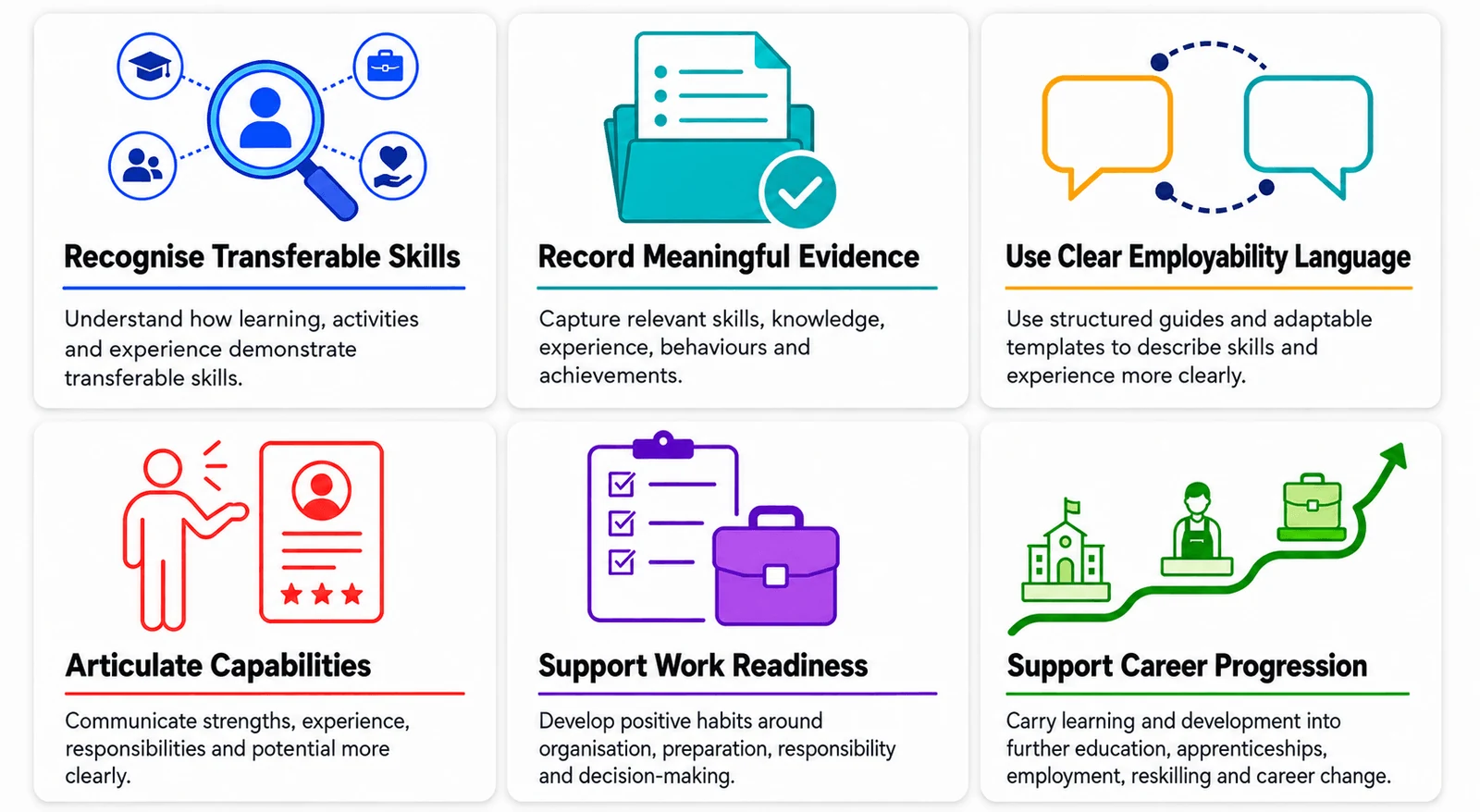
Learners develop valuable and transferable skills through education, training, work experience, volunteering, caring responsibilities, part-time work and wider life experiences. However, these capabilities are not always recognised or communicated in language that employers understand.
CVGO Digital helps learners recognise, record and evidence their skills, knowledge, experience and behaviours. By reflecting on what they have done, learners can better understand their strengths, identify areas for development and articulate their capabilities more clearly.
This supports work readiness, greater confidence and clearer progression into further education, apprenticeships, employment and self-employment.
Make development visible. Build work readiness. Support progression.
- Understand
- Record
- Describe
- Communicate
- Prepare
- Progress
Preparedness And Progression
Supporting Applications and Positive Destinations
Education providers invest significant time helping learners prepare for further education, apprenticeships, employment and other future opportunities.
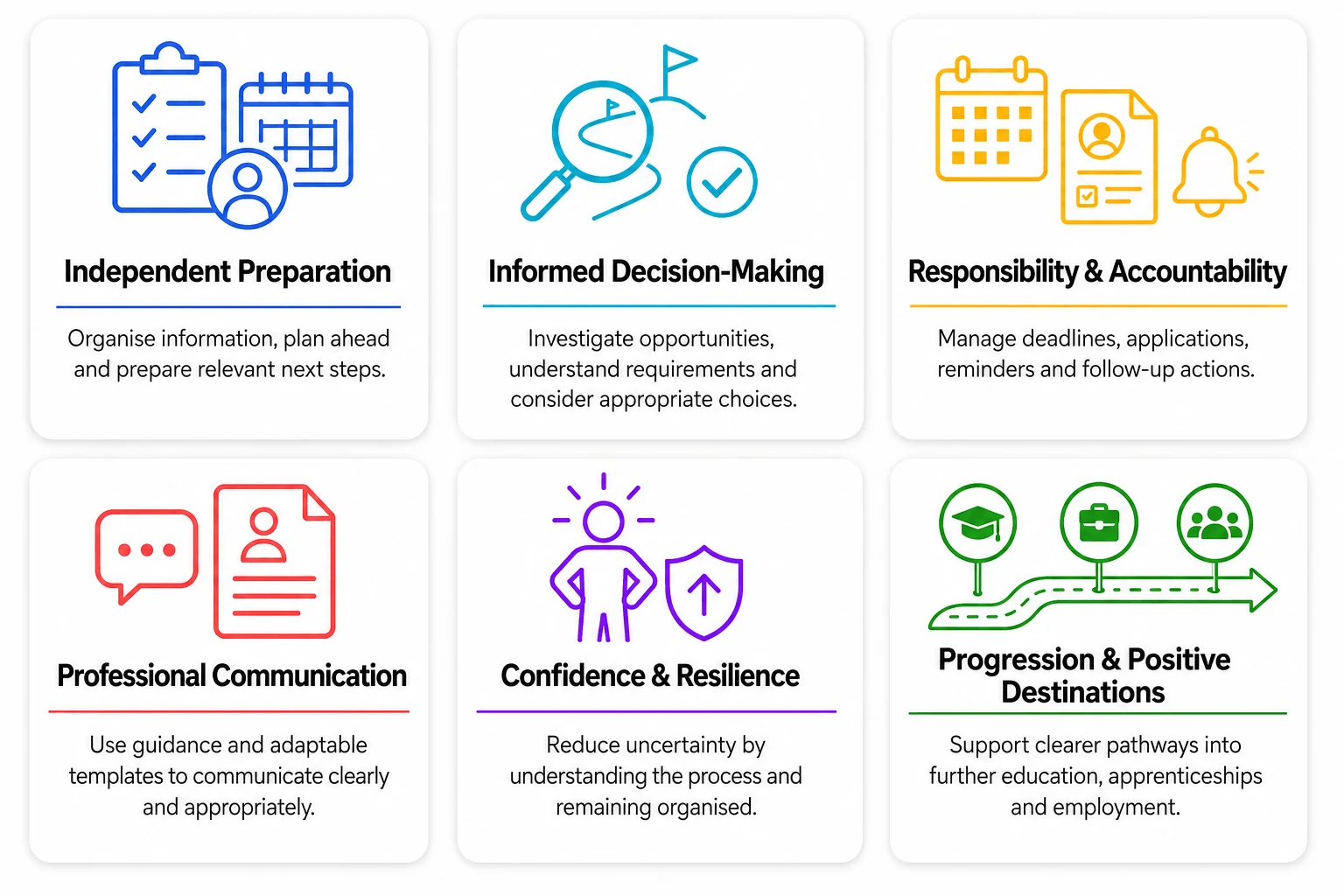
CVGO Digital reinforces this support by giving learners a clear structure through which they can investigate opportunities, understand requirements, organise relevant information, prepare applications and take greater ownership of their next steps.
Guidance, adaptable templates, reminders and application tracking encourage learners to act with greater responsibility and accountability throughout the process. Rather than relying on others to manage every stage, learners can plan ahead, make informed decisions, communicate professionally and monitor their own progression.
Greater preparation can help reduce uncertainty, build confidence and develop the independent habits learners need as they move from structured education and training into working life.
Supporting greater ownership, stronger work readiness and more confident progression.
Supporting Learner Independence
Ownership Without Ongoing Staff Management
Schools, colleges and training providers already invest significant time supporting learner development, employability and progression.
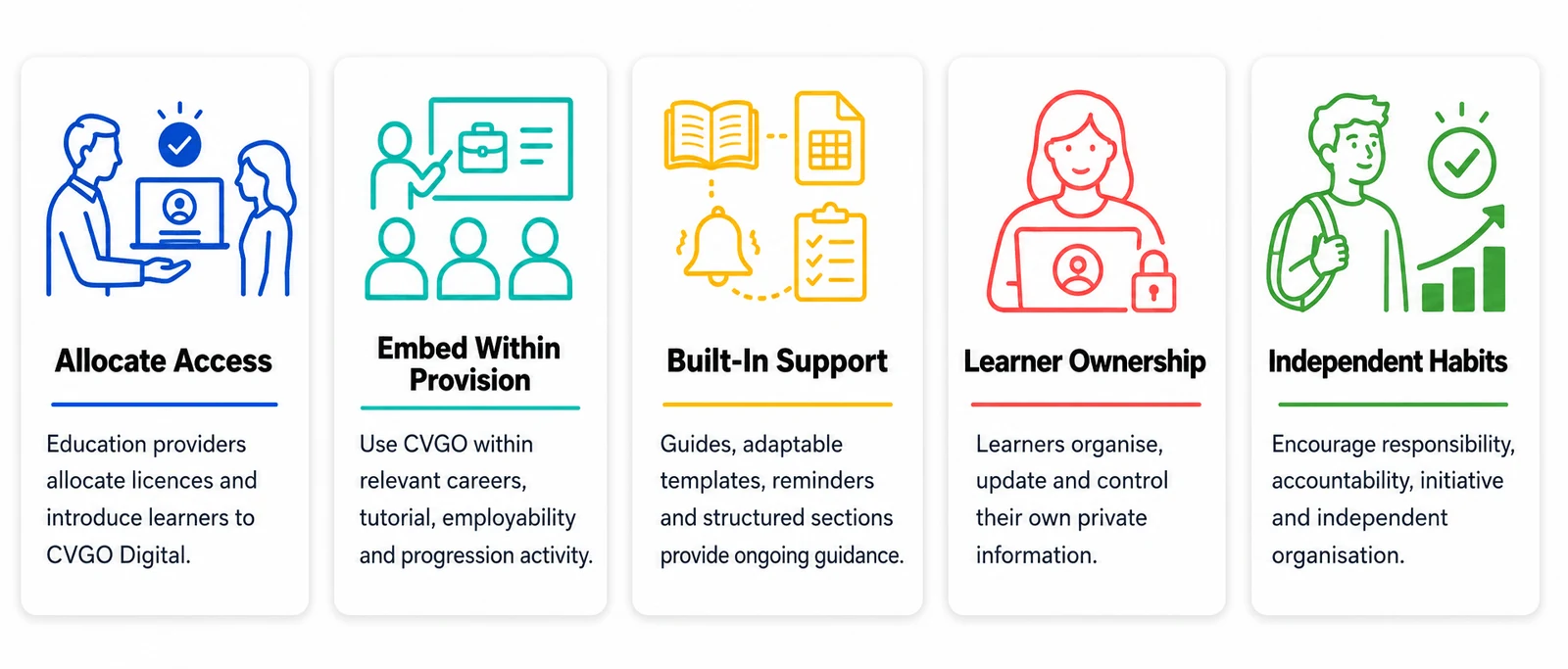
CVGO Digital is designed to reinforce these outcomes without requiring staff to upload, update or maintain each learner's private profile. Education providers allocate the licences and introduce learners to the platform; learners then take responsibility for organising their information, maintaining their records and managing their own next steps.
Built-in guides, adaptable templates, reminders and structured sections provide ongoing support within the licence. Staff can encourage learners and incorporate CVGO into relevant careers, tutorial or progression activity without becoming responsible for managing the learner's personal information.
This helps learners develop greater independence, initiative, responsibility and accountability while reducing reliance on staff to oversee every part of the process.
Education enables access. The learner takes ownership.
Ready To Support Lifelong Progression?
Give Learners a Digital Licence They Can Carry Forward
See how CVGO Digital can work alongside your existing provision to support learner ownership, work readiness and progression—from age 14 through to retirement.